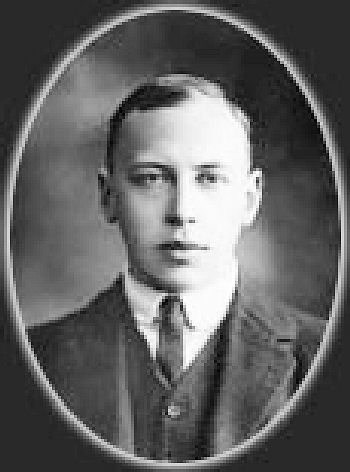
Vaiden, Mississippi
My
Favorite Literature
The wind was a torrent of darkness among the gusty trees,
The moon was a ghostly galleon tossed upon cloudy seas.
The road was a ribbon of moonlight over the purple moor,
And the highwayman came riding—
Riding—riding—
The highwayman came riding, up to the old inn-door.
He’d a French cocked-hat on his forehead, a bunch of lace at his
chin,
A coat of the claret velvet, and breeches of brown doe-skin.
They fitted with never a wrinkle. His boots were up to the thigh.
And he rode with a jewelled twinkle,
His pistol butts a-twinkle,
His rapier hilts a-twinkle, under the jewelled sky.
Over the cobbles he clattered and clashed in the dark inn-yard.
He tapped with his whip on the shutters, but all was locked and barred.
He whistled a tune to the window, and who should be waiting there
But the landlord’s black-eyed daughter,
Bess, the landlord’s daughter,
Plaiting a dark red love-knot into her long black hair.
And dark in the dark old inn-yard a stable-wicket creaked
Where Tim the ostler listened. His face was white and peaked.
His eyes were hollows of madness, his mouth like mouldy
hay,
But he loved the landlord’s daughter,
The landlord’s red-lipped daughter.
Dumb as a dog he listened, and he heard the robber say—
“One kiss my bonny sweetheart, I’m after a prize to-night,
But I shall be back with the yellow gold before the morning light;
Yet if they press me sharply, and harry me through the day,
Then look for me by moonlight,
Watch for me by moonlight,
I’ll come to thee by moonlight, though hell should bar the way.”
He
rose upright in the stirrups. He scarce could reach her hand,
But she loosened her hair i’ the casement. His face
burnt like a brand
As the black cascade of perfume came tumbling over his breast;
And he kissed its waves in the moonlight,
(Oh, sweet black waves in the moonlight!)
Then he tugged at his reins in the moonlight, and
galloped away to the west.
Part
II
He did not come in the dawning. He did not come at noon;
And out o’ the tawny sunset, before the rise o’ the moon,
When the road was a gypsy’s ribbon, looping the purple moor,
A red-coat troop came marching—
Marching—marching—
King George’s men came marching, up to the old inn-door.
They said no word to the landlord. They drank his ale instead.
But gagged his daughter, and bound her, to the foot of her narrow bed.
Two of them knelt at her casement, with muskets at their side!
There was death at every window;
And hell at one dark window;
For Bess could see, though her casement, the road that he would ride.
They had tied her up to attention, with many a sniggering jest.
They had bound a musket beside her, with muzzle beneath her breast!
"Now, keep good watch!" and they kissed her. She heard the dead man
say—
Look for me by moonlight;
Watch for me by moonlight;
I’ll come to thee by moonlight, though hell should bar the way!
She twisted her hands behind her; but all the knots held good!
She writhed her hands till her fingers were wet with sweat or blood!
They stretched and strained in the darkness, and the hours crawled by like
years,
Till, now, on the stroke of midnight,
Cold on the stroke of midnight,
The tip of one finger touched it! The trigger at least was hers!
The tip of one finger touched it. She strove no more for the
rest.
Up, she stood up to attention, with the muzzle beneath her breast.
She would not risk their hearing; she would not strive again;
For the road lay bare in the moonlight;
Blank and bare in the moonlight;
And the blood of her veins, in the moonlight, throbbed to her love’s refrain.
Tlot-tlot; tlot-tlot! Had they
heard it? The horse-hoofs ringing clear;
Tlot-tlot, tlot-tlot,
in the distance! Were they deaf that they did not hear?
Down the ribbon of moonlight, over the brow of the hill,
The highwayman came riding,
Riding, riding!
The red-coats looked to their priming! She stood up, straight and still.
Tlot-tlot, in the
frosty silence! Tlot-tlot, in the echoing
night!
Nearer he came and nearer. Her face was like a light.
Her eyes grew wide for a moment; she drew one last deep breath,
Then her finger moved in the moonlight,
Her musket shattered the moonlight,
Shattered her breast in the moonlight and warned him—with her death.
He turned. He spurred to the west; he did not know who stood
Bowed, with her head o’er the musket, drenched with her own red blood!
Not till the dawn he heard it, and face grew grey to hear
How Bess, the landlord’s daughter,
The landlord’s black-eyed daughter,
Had watched for her love in the moonlight, and died in the darkness there.
Back, he spurred like a madman, shouting a curse to the sky,
With the white road smoking behind him and his rapier brandished high.
Blood-red were his spurs i’ the golden noon;
wine-red was his velvet coat;
When they shot him down on the highway,
Down like a dog on the highway,
And he lay in his blood on the highway, with the bunch of lace at his throat
And still of a winter’s night, they say, when the wind is in the
trees,
When the moon is a ghostly galleon tossed upon cloudy seas,
When the road is a ribbon of moonlight over the purple moor,
A highwayman comes riding—
Riding—Riding—
A highwayman comes riding, up to the old inn-door.
Over the cobbles he clatters and clangs in the dark inn-yard.
And he taps with his whip on the shutters, but all is locked and barred.
He whistles a tune to the window, and who should be waiting there
But the landlord’s black-eyed daughter,
Bess, the landlord’s daughter,
Plaiting a dark red love-knot into her long black hair.
by Edgar Allan Poe
(1846)
THE
thousand injuries of Fortunato I had borne as I best could, but when he
ventured upon insult I vowed revenge. You, who so well know the nature of my
soul, will not suppose, however, that gave utterance to a threat. At length I
would be avenged; this was a point definitely, settled --but the very
definitiveness with which it was resolved precluded the idea of risk. I must
not only punish but punish with impunity. A wrong is unredressed when
retribution overtakes its redresser. It is equally unredressed when the
avenger fails to make himself felt as such to him who has done the wrong.
It
must be understood that neither by word nor deed had I given Fortunato cause
to doubt my good will. I continued, as was my in to
smile in his face, and he did not perceive that my to smile now was at the
thought of his immolation.
He
had a weak point -- this Fortunato --although in other regards
he was a man to be respected and even feared. He prided himself on his
connoisseurship in wine. Few Italians have the true virtuoso spirit. For the
most part their enthusiasm is adopted to suit the time and opportunity, to practise imposture upon the British and Austrian
millionaires. In painting and gemmary, Fortunato, like his countrymen, was a
quack, but in the matter of old wines he was sincere. In this respect I did
not differ from him materially; --I was skilful in
the Italian vintages myself, and bought largely whenever I could.
It
was about dusk, one evening during the supreme madness of the carnival
season, that I encountered my friend. He accosted me with excessive warmth,
for he had been drinking much. The man wore motley. He had on a tight-fitting
parti-striped dress, and his head was surmounted by
the conical cap and bells. I was so pleased to see him that I thought I
should never have done wringing his hand.
I
said to him --"My dear Fortunato, you are luckily met. How remarkably
well you are looking to-day. But I have received a pipe of what passes for
Amontillado, and I have my doubts."
"How?"
said he. "Amontillado, A pipe? Impossible! And in the middle of the
carnival!"
"I
have my doubts," I replied; "and I was silly enough to pay the full
Amontillado price without consulting you in the matter. You were not to be
found, and I was fearful of losing a bargain."
"Amontillado!"
"I
have my doubts."
"Amontillado!"
"And
I must satisfy them."
"Amontillado!"
"As
you are engaged, I am on my way to Luchresi. If any one has a critical turn it is he. He will tell me
--"
"Luchresi cannot tell Amontillado from Sherry."
"And
yet some fools will have it that his taste is a match for your own.
"Come,
let us go."
"Whither?"
"To
your vaults."
"My
friend, no; I will not impose upon your good nature. I perceive you have an
engagement. Luchresi--"
"I
have no engagement; --come."
"My
friend, no. It is not the engagement, but the severe cold with which I
perceive you are afflicted. The vaults are insufferably damp. They are
encrusted with nitre."
"Let
us go, nevertheless. The cold is merely nothing. Amontillado! You have been
imposed upon. And as for Luchresi, he cannot
distinguish Sherry from Amontillado."
Thus
speaking, Fortunato possessed himself of my arm; and putting on a mask of
black silk and drawing a roquelaire closely about
my person, I suffered him to hurry me to my palazzo.
There
were no attendants at home; they had absconded to make merry in honour of the time. I had told them that I should not
return until the morning, and had given them explicit orders not to stir from
the house. These orders were sufficient, I well
knew, to insure their immediate disappearance, one and all, as soon as my
back was turned.
I
took from their sconces two flambeaux, and giving one to Fortunato, bowed him
through several suites of rooms to the archway that led into the vaults. I
passed down a long and winding staircase, requesting him to be cautious as he
followed. We came at length to the foot of the descent, and stood together
upon the damp ground of the catacombs of the Montresors.
The
gait of my friend was unsteady, and the bells upon his cap jingled as he
strode.
"The
pipe," he said.
"It
is farther on," said I; "but observe the white web-work which
gleams from these cavern walls."
He
turned towards me, and looked into my eves with two filmy orbs that distilled
the rheum of intoxication.
"Nitre?" he asked, at length.
"Nitre," I replied. "How long have you had that
cough?"
"Ugh!
ugh! ugh! --ugh! ugh! ugh! --ugh! ugh! ugh! --ugh! ugh! ugh! --ugh! ugh!
ugh!"
My
poor friend found it impossible to reply for many minutes.
"It
is nothing," he said, at last.
"Come,"
I said, with decision, "we will go back; your health is precious. You
are rich, respected, admired, beloved; you are happy, as once I was. You are
a man to be missed. For me it is no matter. We will go back; you will be ill,
and I cannot be responsible. Besides, there is Luchresi
--"
"Enough,"
he said; "the cough's a mere nothing; it will not kill me. I shall not die
of a cough."
"True
--true," I replied; "and, indeed, I had
no intention of alarming you unnecessarily --but you should use all proper
caution. A draught of this Medoc will defend
us from the damps.
Here
I knocked off the neck of a bottle which I drew from a long row of its
fellows that lay upon the mould.
"Drink,"
I said, presenting him the wine.
He
raised it to his lips with a leer. He paused and nodded to me familiarly,
while his bells jingled.
"I
drink," he said, "to the buried that repose around us."
"And
I to your long life."
He
again took my arm, and we proceeded.
"These
vaults," he said, "are extensive."
"The
Montresors," I replied, "were a great and
numerous family."
"I
forget your arms."
"A
huge human foot d'or, in a field azure; the foot crushes a serpent rampant
whose fangs are imbedded in the heel."
"And
the motto?"
"Nemo
me impune lacessit."
"Good!"
he said.
The
wine sparkled in his eyes and the bells jingled. My own fancy grew warm with
the Medoc. We had passed through long walls
of piled skeletons, with casks and puncheons intermingling, into the inmost
recesses of the catacombs. I paused again, and this time I made bold to seize
Fortunato by an arm above the elbow.
"The
nitre!" I said; "see, it increases. It
hangs like moss upon the vaults. We are below the river's bed. The drops of
moisture trickle among the bones. Come, we will go back ere
it is too late. Your cough --"
"It
is nothing," he said; "let us go on. But first, another draught of
the Medoc."
I
broke and reached him a flagon of De Grave. He emptied it at a breath. His
eyes flashed with a fierce light. He laughed and threw the bottle upwards
with a gesticulation I did not understand.
I
looked at him in surprise. He repeated the movement --a grotesque one.
"You
do not comprehend?" he said.
"Not
I," I replied.
"Then
you are not of the brotherhood."
"How?"
"You
are not of the masons."
"Yes,
yes," I said; "yes, yes."
"You?
Impossible! A mason?"
"A
mason," I replied.
"A
sign," he said, "a sign."
"It
is this," I answered, producing from beneath the folds of my roquelaire a trowel.
"You
jest," he exclaimed, recoiling a few paces. "But let us proceed to
the Amontillado."
"Be
it so," I said, replacing the tool beneath the cloak and again offering
him my arm. He leaned upon it heavily. We continued our route in search of
the Amontillado. We passed through a range of low arches, descended, passed
on, and descending again, arrived at a deep crypt, in which the foulness of
the air caused our flambeaux rather to glow than flame.
At
the most remote end of the crypt there appeared another less spacious. Its
walls had been lined with human remains, piled to the vault overhead, in the
fashion of the great catacombs of Paris.
Three sides of this interior crypt were still ornamented in this manner. From
the fourth side the bones had been thrown down, and lay promiscuously upon
the earth, forming at one point a mound of some size. Within the wall thus
exposed by the displacing of the bones, we perceived a still interior crypt
or recess, in depth about four feet, in width three, in height six or seven.
It seemed to have been constructed for no especial use within itself, but formed
merely the interval between two of the colossal supports of the roof of the
catacombs, and was backed by one of their circumscribing walls of solid
granite.
It
was in vain that Fortunato, uplifting his dull torch, endeavoured
to pry into the depth of the recess. Its termination the feeble light did not
enable us to see.
"Proceed,"
I said; "herein is the Amontillado. As for Luchresi
--"
"He
is an ignoramus," interrupted my friend, as he stepped unsteadily forward,
while I followed immediately at his heels. In niche, and finding an instant
he had reached the extremity of the niche, and finding his progress arrested
by the rock, stood stupidly bewildered. A moment more and I had fettered him
to the granite. In its surface were two iron staples, distant from each other
about two feet, horizontally. From one of these depended a short chain, from
the other a padlock. Throwing the links about his waist, it was but the work
of a few seconds to secure it. He was too much astounded to resist.
Withdrawing the key I stepped back from the recess.
"Pass
your hand," I said, "over the wall; you cannot help feeling the nitre. Indeed, it is very damp. Once more let me implore
you to return. No? Then I must positively leave you.
But
I must first render you all the little attentions in my power."
"The
Amontillado!" ejaculated my friend, not yet recovered from his
astonishment.
"True,"
I replied; "the Amontillado."
As
I said these words I busied myself among the pile of bones of which I have
before spoken. Throwing them aside, I soon uncovered a quantity of building
stone and mortar.
With
these materials and with the aid of my trowel, I began vigorously to wall up
the entrance of the niche.
I
had scarcely laid the first tier of the masonry when I discovered that the
intoxication of Fortunato had in a great measure worn off. The earliest
indication I had of this was a low moaning cry from the depth of the recess.
It was not the cry of a drunken man. There was then a long and obstinate
silence. I laid the second tier, and the third, and the fourth; and then I
heard the furious vibrations of the chain. The noise lasted for several
minutes, during which, that I might hearken to it with the more satisfaction,
I ceased my labours and sat down upon the bones.
When at last the clanking subsided, I resumed the trowel, and finished
without interruption the fifth, the sixth, and the seventh tier.
The
wall was now nearly upon a level with my breast. I again paused, and holding
the flambeaux over the mason-work, threw a few feeble rays upon the figure
within.
A
succession of loud and shrill screams, bursting suddenly from the throat of
the chained form, seemed to thrust me violently back. For a brief moment I
hesitated, I trembled.
Unsheathing
my rapier, I began to grope with it about the recess; but the thought of an
instant reassured me. I placed my hand upon the solid fabric of the
catacombs, and felt satisfied. I reapproached the
wall; I replied to the yells of him who clamoured.
I re-echoed, I aided, I surpassed them in volume and in strength. I did this,
and the clamourer grew still.
It
was now midnight, and my task was drawing to a close. I had completed the
eighth, the ninth and the tenth tier. I had finished a portion of the last
and the eleventh; there remained but a single stone to be fitted and
plastered in. I struggled with its weight; I placed it partially in its
destined position. But now there came from out the niche a low laugh that
erected the hairs upon my head. It was succeeded by a sad voice, which I had
difficulty in recognizing as that of the noble Fortunato. The voice said--
"Ha!
ha! ha! --he! he! he! --a very good joke, indeed --an excellent jest. We will
have many a rich laugh about it at the palazzo --he! he! he! --over our wine
--he! he! he!"
"The
Amontillado!" I said.
"He!
he! he! --he! he! he! --yes, the Amontillado. But is it not getting late?
Will not they be awaiting us at the palazzo, the Lady Fortunato and the rest?
Let us be gone."
"Yes,"
I said, "let us be gone."
"For
the love of God, Montresor!"
"Yes,"
I said, "for the love of God!"
But
to these words I hearkened in vain for a reply. I grew impatient. I called
aloud --
"Fortunato!"
No
answer. I called again --
"Fortunato!"
No
answer still. I thrust a torch through the remaining aperture and let it fall
within. There came forth in return only a jingling of the bells. My heart
grew sick; it was the dampness of the catacombs that made it so. I hastened
to make an end of my labour. I forced the last
stone into its position; I plastered it up. Against the new masonry I
re-erected the old rampart of bones. For the half of a century no mortal has
disturbed them. In pace requiescat!
By Edgar Allan Poe
(1843)
TRUE! nervous, very, very dreadfully nervous I had
been and am; but why WILL you say that I am mad? The disease had sharpened my
senses, not destroyed, not dulled them. Above all was the sense of hearing
acute. I heard all things in the heaven and in the earth. I heard many things
in hell. How then am I mad? Hearken! and observe how healthily, how calmly, I
can tell you the whole story.
It is impossible to say how first the
idea entered my brain, but, once conceived, it haunted me day and night.
Object there was none. Passion there was none. I loved the old man. He had
never wronged me. He had never given me insult. For his gold I had no desire.
I think it was his eye! Yes, it was this! One of his eyes resembled that of a
vulture -- a pale blue eye with a film over it. Whenever it fell upon me my
blood ran cold, and so by degrees, very gradually, I made up my mind to take
the life of the old man, and thus rid myself of the eye for ever. Now this is
the point. You fancy me mad. Madmen know nothing. But you should have seen
me. You should have seen how wisely I proceeded -- with what caution -- with
what foresight, with what dissimulation, I went to work! I was never kinder
to the old man than during the whole week before I killed him. And every
night about midnight I turned the latch of his door and opened it oh, so
gently! And then, when I had made an opening sufficient for my head, I put in
a dark lantern all closed, closed so that no light shone out, and then I
thrust in my head. Oh, you would have laughed to see how cunningly I thrust
it in! I moved it slowly, very, very slowly, so that I might not disturb the
old man's sleep. It took me an hour to place my whole head within the opening
so far that I could see him as he lay upon his bed. Ha! would a madman have
been so wise as this? And then when my head was well in the room I undid the
lantern cautiously -- oh, so cautiously -- cautiously
(for the hinges creaked), I undid it just so much that a single thin ray fell
upon the vulture eye. And this I did for seven long nights, every night just
at midnight, but I found the eye always closed, and so it was impossible to
do the work, for it was not the old man who vexed me but his Evil Eye. And
every morning, when the day broke, I went boldly into the chamber and spoke
courageously to him, calling him by name in a hearty tone, and inquiring how
he had passed the night. So you see he would have
been a very profound old man, indeed , to suspect that every night, just at
twelve, I looked in upon him while he slept.
Upon the eighth night I was more than
usually cautious in opening the door. A watch's minute hand moves more
quickly than did mine. Never before that night had I felt the extent of my
own powers, of my sagacity. I could scarcely contain my feelings of triumph.
To think that there I was opening the door little by little, and he not even
to dream of my secret deeds or thoughts. I fairly chuckled at the idea, and
perhaps he heard me, for he moved on the bed suddenly as if startled. Now you
may think that I drew back -- but no. His room was as black as pitch with the
thick darkness (for the shutters were close fastened through fear of robbers),
and so I knew that he could not see the opening of the door, and I kept
pushing it on steadily, steadily.
I had my head in, and was about to open
the lantern, when my thumb slipped upon the tin fastening , and the old man
sprang up in the bed, crying out, "Who's there?"
I kept quite still and said nothing. For
a whole hour I did not move a muscle, and in the meantime I did not hear him
lie down. He was still sitting up in the bed, listening; just as I have done
night after night hearkening to the death watches in the wall.
Presently, I heard a slight groan, and I
knew it was the groan of mortal terror. It was not a groan of pain or of
grief -- oh, no! It was the low stifled sound that arises from the bottom of
the soul when overcharged with awe. I knew the sound well. Many a night, just
at midnight, when all the world slept, it has welled up from my own bosom,
deepening, with its dreadful echo, the terrors that distracted me. I say I
knew it well. I knew what the old man felt, and pitied him although I
chuckled at heart. I knew that he had been lying awake ever since the first
slight noise when he had turned in the bed. His fears had been ever since
growing upon him. He had been trying to fancy them causeless, but could not.
He had been saying to himself, "It is nothing but the wind in the
chimney, it is only a mouse crossing the floor," or, "It is merely
a cricket which has made a single chirp." Yes
he has been trying to comfort himself with these suppositions ; but he had
found all in vain. ALL IN VAIN, because Death in approaching him had stalked
with his black shadow before him and enveloped the victim. And it was the
mournful influence of the unperceived shadow that caused him to feel,
although he neither saw nor heard, to feel the presence of my head within the
room.
When I had waited a long time very
patiently without hearing him lie down, I resolved to open a little -- a
very, very little crevice in the lantern. So I opened it -- you cannot
imagine how stealthily, stealthily -- until at length a single dim ray like
the thread of the spider shot out from the crevice and fell upon the vulture
eye.
It was open, wide, wide open, and I grew
furious as I gazed upon it. I saw it with perfect distinctness -- all a dull
blue with a hideous veil over it that chilled the very marrow in my bones,
but I could see nothing else of the old man's face or person, for I had
directed the ray as if by instinct precisely upon the damned spot.
And now have I not told you that what you
mistake for madness is but over-acuteness of the senses? now, I say, there
came to my ears a low, dull, quick sound, such as a watch makes when
enveloped in cotton. I knew that sound well too. It was the beating of the
old man's heart. It increased my fury as the beating of a drum stimulates the
soldier into courage.
But even yet I refrained and kept still.
I scarcely breathed. I held the lantern motionless. I tried how steadily I
could maintain the ray upon the eye. Meantime the hellish tattoo of the heart
increased. It grew quicker and quicker, and louder and louder, every instant.
The old man's terror must have been extreme! It grew louder, I say, louder
every moment! -- do you mark me well? I have told you that I am nervous: so I
am. And now at the dead hour of the night, amid the dreadful silence of that
old house, so strange a noise as this excited me to uncontrollable terror.
Yet, for some minutes longer I refrained and stood still. But the beating
grew louder, louder! I thought the heart must burst. And now a new anxiety
seized me -- the sound would be heard by a neighbour!
The old man's hour had come! With a loud yell, I threw open the lantern and
leaped into the room. He shrieked once -- once
only. In an instant I dragged him to the floor, and pulled the heavy bed over
him. I then smiled gaily, to find the deed so far done. But for many minutes
the heart beat on with a muffled sound. This, however, did not vex me; it
would not be heard through the wall. At length it ceased. The old man was
dead. I removed the bed and examined the corpse. Yes, he was stone, stone
dead. I placed my hand upon the heart and held it there many minutes. There
was no pulsation. He was stone dead. His eye would trouble me no more.
If still you think me mad, you will think
so no longer when I describe the wise precautions I took for the concealment
of the body. The night waned, and I worked hastily, but in silence.
I took up three planks from the flooring
of the chamber, and deposited all between the scantlings. I then replaced the
boards so cleverly so cunningly, that no human eye -- not even his -- could
have detected anything wrong. There was nothing to wash out -- no stain of
any kind -- no blood-spot whatever. I had been too wary for that.
When I had made an end of these labours, it was four o'clock -- still dark as midnight.
As the bell sounded the hour, there came a knocking at the street door. I
went down to open it with a light heart, -- for what had I now to fear? There
entered three men, who introduced themselves, with perfect suavity, as
officers of the police. A shriek had been heard by a neighbour
during the night; suspicion of foul play had been aroused; information had
been lodged at the police office, and they (the officers) had been deputed to
search the premises.
I smiled, -- for what had I to fear? I
bade the gentlemen welcome. The shriek, I said, was my own in a dream. The
old man, I mentioned, was absent in the country. I took my visitors all over
the house. I bade them search -- search well. I led
them, at length, to his chamber. I showed them his treasures, secure,
undisturbed. In the enthusiasm of my confidence, I brought chairs into the
room, and desired them here to rest from their fatigues, while I myself, in
the wild audacity of my perfect triumph, placed my own seat upon the very spot
beneath which reposed the corpse of the victim.
The officers were satisfied. My MANNER
had convinced them. I was singularly at ease. They sat and while I answered
cheerily, they chatted of familiar things. But, ere long, I felt myself
getting pale and wished them gone. My head ached, and I fancied a ringing in
my ears; but still they sat, and still chatted. The ringing became more
distinct : I talked more freely to get rid of the feeling: but it continued
and gained definitiveness -- until, at length, I found that the noise was NOT
within my ears.
No doubt I now grew VERY pale; but I
talked more fluently, and with a heightened voice. Yet the sound increased --
and what could I do? It was A LOW, DULL, QUICK SOUND -- MUCH SUCH A SOUND AS
A WATCH MAKES WHEN ENVELOPED IN COTTON. I gasped for breath, and yet the
officers heard it not. I talked more quickly, more vehemently but the noise
steadily increased. I arose and argued about trifles, in a high key and with
violent gesticulations; but the noise steadily increased. Why WOULD they not
be gone? I paced the floor to and fro with heavy strides, as if excited to
fury by the observations of the men, but the noise steadily increased. O God!
what COULD I do? I foamed -- I raved -- I swore! I swung the chair upon which
I had been sitting, and grated it upon the boards, but the noise arose over
all and continually increased. It grew louder -- louder
-- louder! And still the men chatted pleasantly , and smiled. Was it possible they heard not?
Almighty God! -- no, no? They heard! -- they suspected! -- they KNEW! -- they
were making a mockery of my horror! -- this I thought, and this I think. But
anything was better than this agony! Anything was more tolerable than this
derision! I could bear those hypocritical smiles no longer! I felt that I
must scream or die! -- and now -- again -- hark! louder! louder! louder!
LOUDER! --
"Villains!" I shrieked,
"dissemble no more! I admit the deed! -- tear up the planks! -- here,
here! -- it is the beating of his hideous heart!"
Edgar Allen Poe
(1845)
Once
upon a midnight dreary, while I pondered, weak and weary,
Over many a quaint and curious volume of forgotten lore,
While I nodded, nearly napping, suddenly there came a tapping,
As of some one gently rapping, rapping at my
chamber door.
"'Tis some visitor," I muttered,
"tapping at my chamber door—
Only
this, and nothing more."
Ah, distinctly I
remember it was in the bleak December,
And each separate dying ember wrought its ghost upon the floor.
Eagerly I wished the morrow;— vainly
I had sought to borrow
From my books surcease of sorrow— sorrow
for the lost Lenore—
For the rare and radiant maiden whom the angels name Lenore—
Nameless
here for evermore.
And the silken sad
uncertain rustling of each purple curtain
Thrilled me— filled me with fantastic terrors never felt
before;
So that now, to still the beating of my heart, I stood repeating,
"'Tis some visitor entreating entrance at my
chamber door—
Some late visitor entreating entrance at my chamber door;—
This
it is, and nothing more."
Presently my soul grew
stronger; hesitating then no longer,
"Sir," said I, "or Madam, truly your forgiveness I implore;
But the fact is I was napping, and so gently you came rapping,
And so faintly you came tapping, tapping at my chamber door,
That I scarce was sure I heard you"—
here I opened wide the door;—
Darkness
there, and nothing more.
Deep into that
darkness peering, long I stood there wondering, fearing,
Doubting, dreaming dreams no mortals ever dared to dream before;
But the silence was unbroken, and the stillness gave no token,
And the only word there spoken was the whispered word, "Lenore!"
This I whispered, and an echo murmured back the word, "Lenore!"-
Merely
this, and nothing more.
Back into the chamber
turning, all my soul within me burning,
Soon again I heard a tapping somewhat louder than before.
"Surely," said I, "surely that is something at my window
lattice:
Let me see, then, what thereat is, and this mystery explore—
Let my heart be still a moment and this mystery explore;—
'Tis the wind and
nothing more."
Open here I flung the
shutter, when, with many a flirt and flutter,
In there stepped a stately raven of the saintly days of yore;
Not the least obeisance made he; not a minute stopped or stayed
he;But, with mien of lord or lady, perched above my
chamber door—
Perched upon a bust of Pallas just above my chamber door—
Perched,
and sat, and nothing more.
Then this ebony bird
beguiling my sad fancy into smiling,
By the grave and stern decorum of the countenance it wore.
"Though thy crest be shorn and shaven, thou," I said, "art
sure no craven,
Ghastly grim and ancient raven wandering from the Nightly shore—
Tell me what thy lordly name is on the Night's Plutonian shore!"
Quoth
the Raven, "Nevermore."
Much I marvelled this ungainly fowl to hear discourse so
plainly,
Though its answer little meaning—
little relevancy bore;
For we cannot help agreeing that no living human being
Ever yet was blest with seeing bird above his chamber door—
Bird or beast upon the sculptured bust above his chamber door,
With
such name as "Nevermore."
But the raven, sitting
lonely on the placid bust, spoke only
That one word, as if his soul in that one word he did outpour.
Nothing further then he uttered—
not a feather then he fluttered—
Till I scarcely more than muttered, "other friends have flown before-
On the morrow he will leave me, as my hopes have flown before."
Then
the bird said, "Nevermore."
Startled at the
stillness broken by reply so aptly spoken,
"Doubtless," said I, "what it utters is its only stock and
store,
Caught from some unhappy master whom unmerciful Disaster
Followed fast and followed faster till his songs one burden bore—
Till the dirges of his Hope that melancholy burden bore
Of
'Never— nevermore'."
But the Raven still
beguiling all my fancy into smiling,
Straight I wheeled a cushioned seat in front of bird, and bust and door;
Then upon the velvet sinking, I betook myself to linking
Fancy unto fancy, thinking what this ominous bird of yore—
What this grim, ungainly, ghastly, gaunt and ominous bird of yore
Meant
in croaking "Nevermore."
This I sat engaged in
guessing, but no syllable expressing
To the fowl whose fiery eyes now burned into my bosom's core;
This and more I sat divining, with my head at ease reclining
On the cushion's velvet lining that the lamplight gloated o'er,
But whose velvet violet lining with the lamplight gloating o'er,
She
shall press, ah, nevermore!
Then methought the air
grew denser, perfumed from an unseen censer
Swung by Seraphim whose footfalls tinkled on the tufted floor.
"Wretch," I cried, "thy God hath lent thee— by these angels he hath sent thee
Respite— respite and nepenthe, from thy memories of
Lenore!
Quaff, oh quaff this kind nepenthe and forget this lost Lenore!"
Quoth
the Raven, "Nevermore."
"Prophet!"
said I, "thing of evil!—
prophet still, if bird or devil!—
Whether Tempter sent, or whether tempest tossed thee here ashore,
Desolate yet all undaunted, on this desert land enchanted—
On this home by horror haunted—
tell me truly, I implore—
Is there— is there balm in
Gilead?— tell me— tell me, I implore!"
Quoth
the Raven, "Nevermore."
"Prophet!"
said I, "thing of evil— prophet
still, if bird or devil!
By that Heaven that bends above us—
by that God we both adore—
Tell this soul with sorrow laden if, within the distant Aidenn,
It shall clasp a sainted maiden whom the angels name Lenore—
Clasp a rare and radiant maiden whom the angels name Lenore."
Quoth
the Raven, "Nevermore."
"Be that word our
sign in parting, bird or fiend," I shrieked, upstarting—
"Get thee back into the tempest and the Night's Plutonian shore!
Leave no black plume as a token of that lie thy soul hath spoken!
Leave my loneliness unbroken!—
quit the bust above my door!
Take thy beak from out my heart, and take thy form from off my door!"
Quoth
the Raven, "Nevermore."
And the Raven, never
flitting, still is sitting, still is sitting
On the pallid bust of Pallas just above my chamber door;
And his eyes have all the seeming of a demon's that is dreaming,
And the lamplight o'er him streaming throws his shadow on the floor;
And my soul from out that shadow that lies floating on the floor
Shall
be lifted— nevermore!
BACK
|